Johor café serves up jobs and hope for OKU community

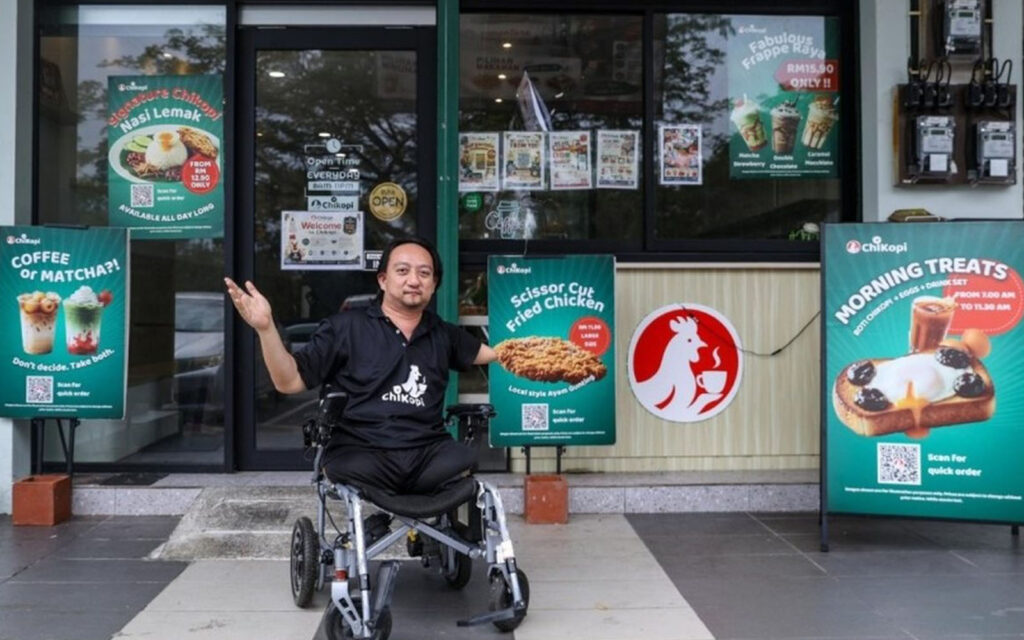

JOHOR BAHRU: Behind the counter of a Johor Bahru café, baristas prepare drinks while kitchen assistants put together plates of nasi lemak and ayam gepuk.
For founder Ruzimi Mohamed, the everyday rhythm of a busy eatery represents something larger: a chance for members of the disabled community (OKU) to earn a living, build confidence and show what they can do.
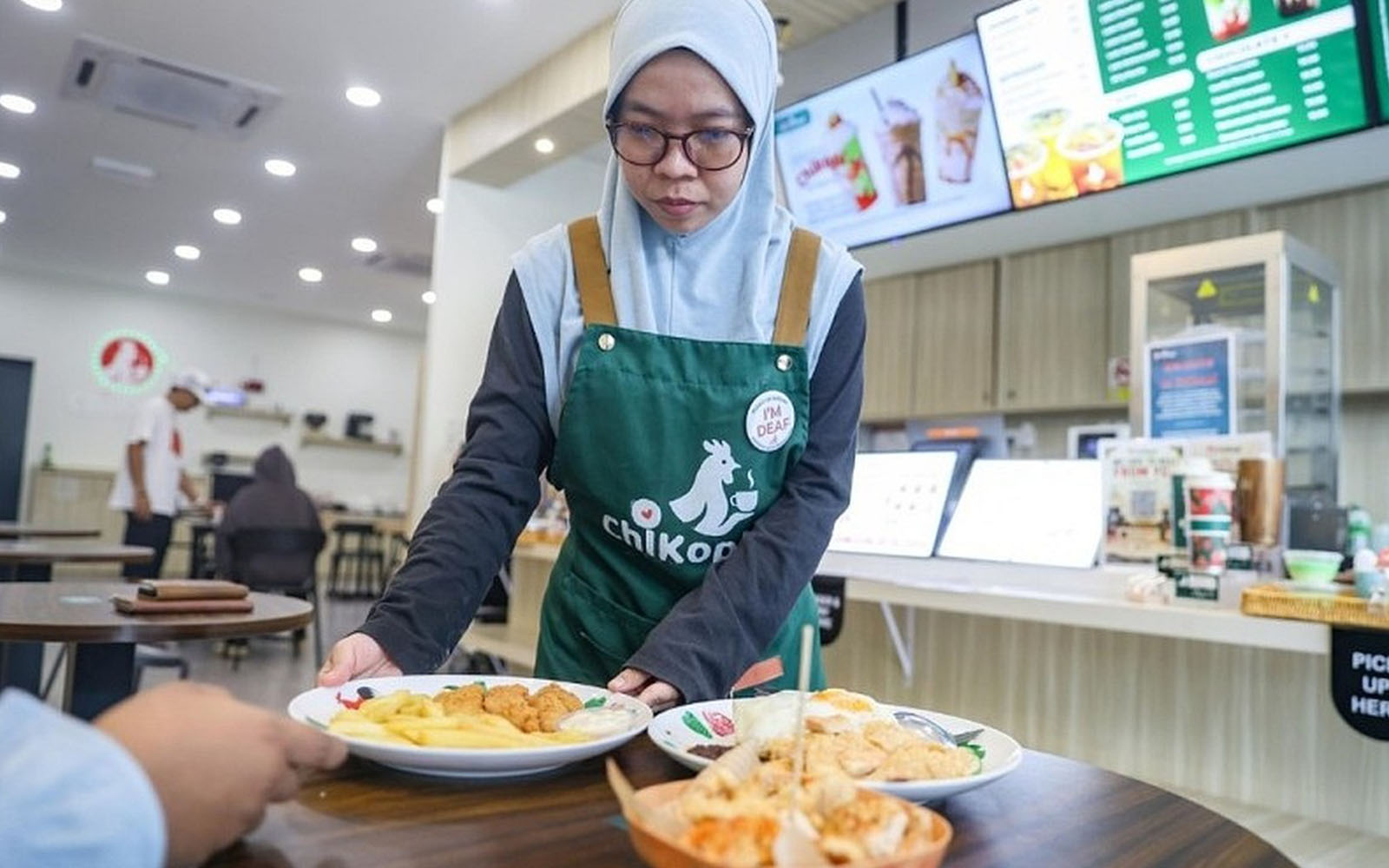
Five of the café’s six employees are OKU, including two people with hearing impairments and three wheelchair users working as baristas and kitchen assistants.
Born without both legs and one arm, the 42-year-old entrepreneur understands the barriers they face – and believes opportunity, rather than sympathy, is what can make the greatest difference.
“We want to prove that the OKU community does not merely need assistance but opportunities,” Ruzimi told Bernama.
“They are capable of working and contributing to a business if given the right training and a suitable working environment.”
That belief is at the heart of the café he founded with his wife, Quratul Ain Hasanan, in January – one designed not only to turn a profit, but also to create meaningful employment for people who are often overlooked.
Launched with an investment of about RM300,000, ChiKopi also gives small entrepreneurs a place to sell their products on consignment without charge.
Among them is an OKU friend who supplies the sambal used in its nasi lemak. He runs his own stall in the morning before working part-time at the café.
The idea emerged after the pandemic weakened the couple’s respective businesses. Ruzimi had been running a web-based information technology and mobile app development company, while Quratul operated a kindergarten.
The experience led them to seek a more sustainable source of income – one that could also bring wider benefits to the community.
They initially considered becoming franchisees of a beverage and ice-cream chain, but dropped the plan after discovering that another outlet under the same brand would be opening nearby.
Instead, they chose to create their own concept, giving them greater freedom to shape its identity and social mission.
The café’s name combines “chicken” and “kopi”, reflecting its focus on chicken dishes and coffee.
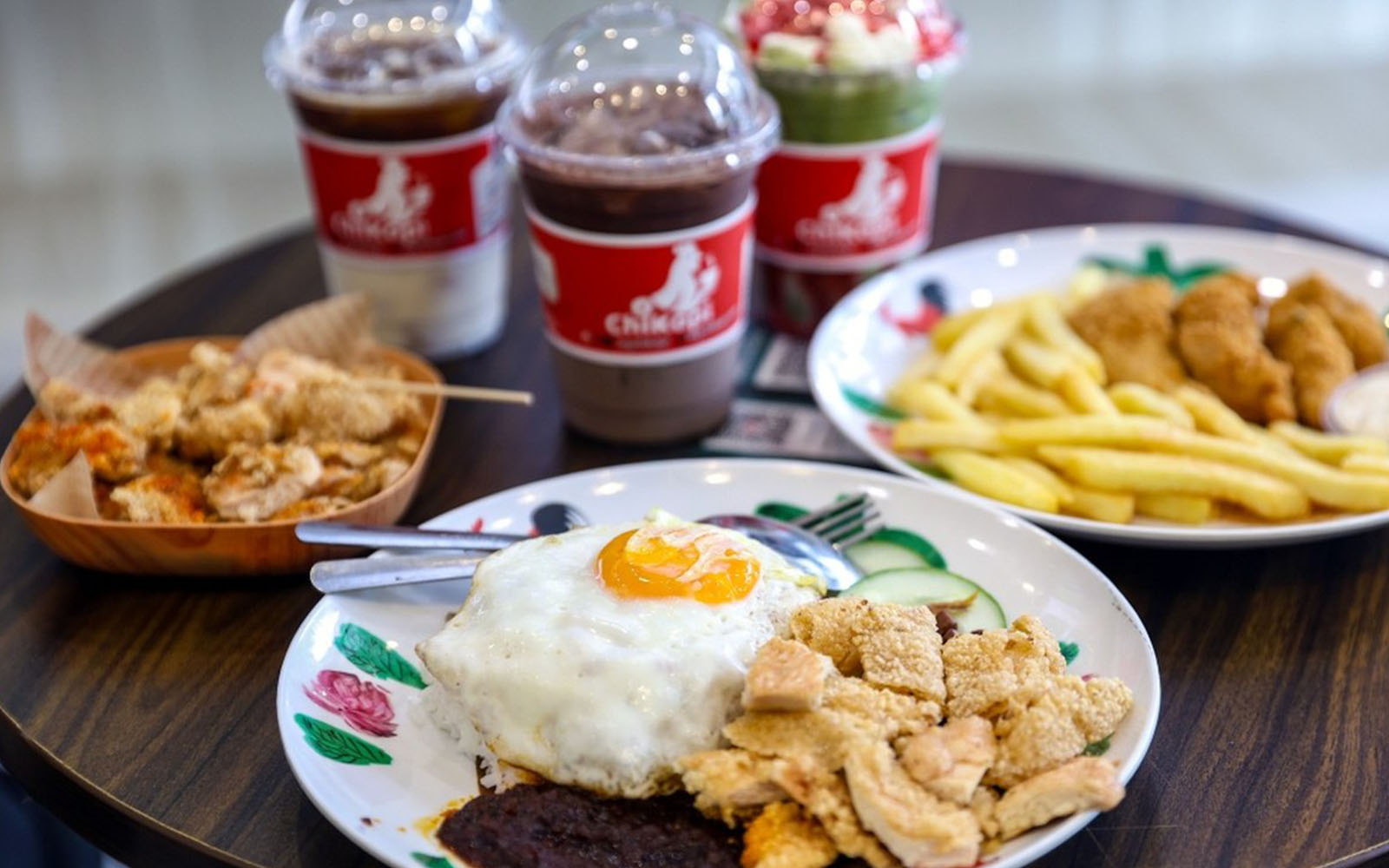
Among its bestselling offerings are nasi lemak, nasi ayam gepuk, matcha strawberry, and longan latte, with the recipes developed in-house.
Balancing purpose with profit
Like many young food businesses, the café has experienced uneven sales. Ruzimi said customer response was strong when it first opened, before slowing during Ramadan and Aidilfitri.
Business has, thankfully, begun to recover over the past two months. To remain competitive, the team regularly develops new menu items and promotes them through social media platforms.
Rising ingredient and operating costs have also made careful planning essential. The business has worked to minimise wastage, improve inventory management and explore new sources of revenue.
At the same time, Ruzimi said the team remains committed to generous portions, quality ingredients and affordable prices.
The next goal is to obtain halal certification before expanding through a social-franchise model over the coming five years.
Under the proposed system, franchisees would be required to ensure that at least 30% of their workforce comprises members of the OKU community. They would also receive training in operations, financial management and workforce development.
“We want to build a brand that grows together with the community,” Ruzimi said. “Profit is important to ensure the business remains sustainable, but the social impact we create for the OKU community is also a measure of our success.”
For him, inclusion is not an act of charity: it is a business principle – and proof that, with the right environment, people of all abilities can contribute, earn and thrive.
Learn more here and follow ChiKopi on Facebook.
ChiKopi
43, Jalan Perjiranan 15/1,
Bandar Dato Onn,
81100 Johor Bahru, Johor