
Keris as a window into earlier Malay life

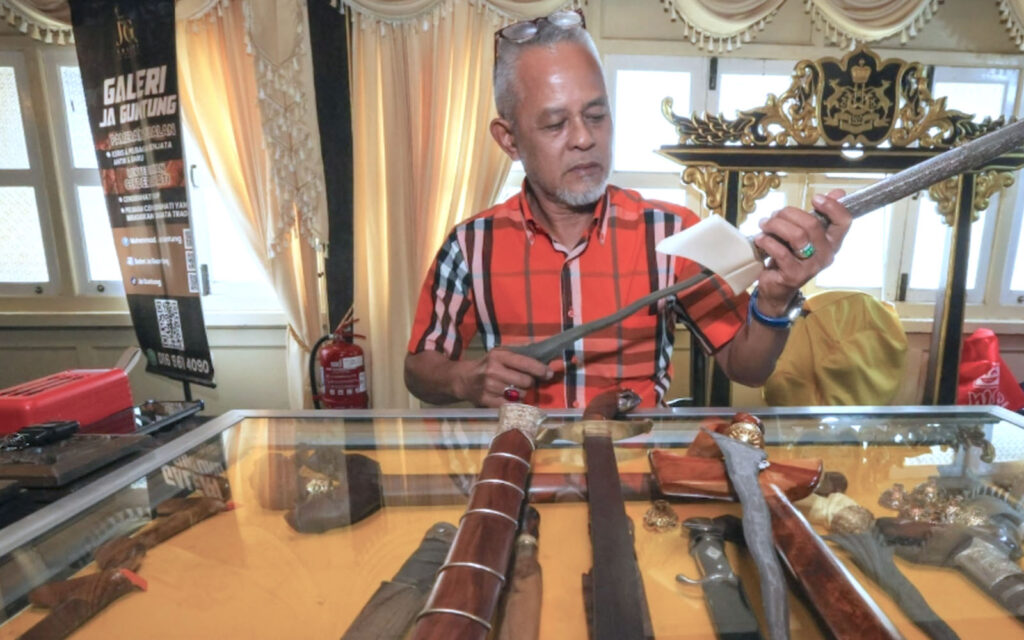

KOTA BHARU: To the untrained eye, one keris may look much like another. To a collector, however, the details can say a great deal.
The length of the blade, the shape of the sheath, the style of the carvings, and even the metals used can offer clues about who once owned the weapon and the world they lived in.
Old-weapons collector Aizal Azwan Amaran said each keris carries its own identity, shaped by history, symbolism and the role of its owner, “whether a ruler, noble, religious scholar or ordinary person”.
The 35-year-old was speaking with Bernama at the Kelantan Heritage Weapons Festival recently.
Though the weapon was once used for self-defence and protection, collectors say its significance went much further than that.
Azek Abu Bakar, 64, said different types of keris could reflect a person’s place in society. The short Keris Debek, for example, was commonly associated with religious figures or tok lebai.
Meanwhile, the longer Keris Penyalang was linked to customary authority and the enforcement of laws, he explained.
Other clues can be found in the ukiran kerawang or openwork carvings, as well as the sampir or sheath.
Azek said sampir designs from the east coast often show strong influences from the sea and boats, reflecting communities whose lives were closely tied to fishing and coastal activity.
Seen this way, the keris becomes more than an object of defence: its design can point to occupation, status, local environment, and the values of the community that produced it.
Looking closely at age and craft
For collectors, age alone is not enough to determine the significance of a keris. Azek said examining an older piece involves looking carefully at the blade structure, corrosion patterns and construction techniques.
He noted, however, that the condition of the sheath can be misleading, as it may have been replaced or preserved differently from the blade itself.
The use of mixed metals, or pamor, can also reveal something about where and how a keris was made, particularly in traditions associated with Bugis craftsmanship, he added.
Some examples have survived for hundreds of years, which collectors see as evidence of sophisticated knowledge of metalworking, materials and preservation.
For Aizal and Azek, that is part of the appeal: a keris is not valued simply because it is old or ornate, but because it can preserve traces of the people who made it, carried it and passed it down.
For anyone willing to look closely, those traces can turn a blade into a window onto an earlier Malay world.